
Why Healthy Love Feels Hard?
Why does love feel so emotionally exhausting and conflict-filled, even when both people desperately want a healthy relationship? This question is the heartbeat of my work. It’s asked by singles tired of the “dating games,” couples feeling the chill of emotional distance, and anyone weary of repeating the same painful relationship patterns.
Everyone wants love. No one wants to fight. And yet, for so many, relationships slowly turn into an emotional battlefield defined by tension, misunderstandings, and quiet resentment.
This article is for singles who want to attract healthy love and for couples who want to stop feeling emotionally drained. If you’ve ever wondered why relationships feel so difficult, you’re not imagining it. You are likely caught in a cycle of “survival mode” rather than “connection mode.”

The Quiet Erosion: How Relationships Actually Fail
No one wakes up and says, “Today I will ruin my relationship.” Breakdown doesn’t happen in one dramatic explosion. It happens quietly, in the shadows of the everyday. It starts with a small, dismissive comment, an eye roll during a talk, or a silence that lasts just one minute too long.
We tell ourselves, “It’s just a fight.” But these moments accumulate like dust. Over time, they change the atmospheric pressure of the relationship. Tone matters. Timing matters. One sentence lands wrong, and the heart closes just a fraction.
This is the slow erosion of emotional safety, and emotional safety is the foundation of lasting love. Even with deep love and commitment, a lack of safety makes a relationship feel like a battlefield rather than a sanctuary.
The Science of the “Battlefield”
Relationship researcher John Gottman discovered that he could predict separation with over 90% accuracy simply by observing how couples argue. It’s not what they argue about—be it money or chores—but the communication patterns they use when they feel hurt.
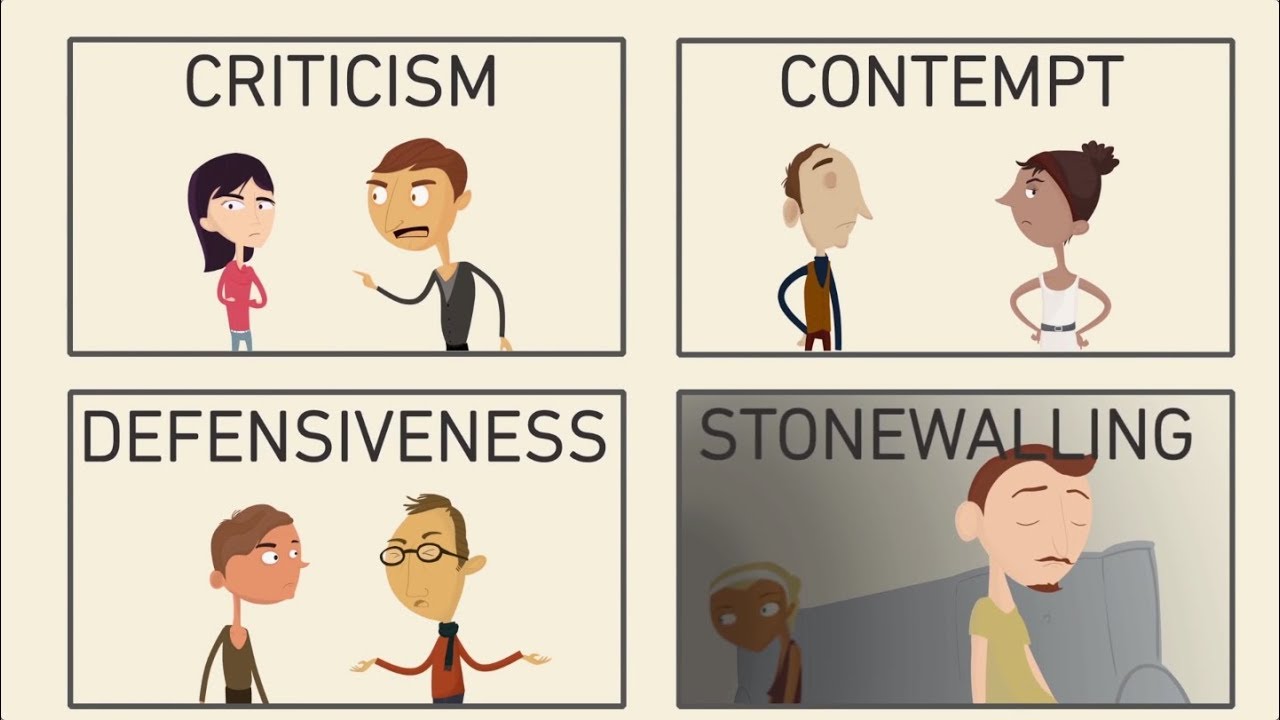
Gottman identified four destructive patterns, which I see every day in my coaching practice. He called them The Four Horsemen, and they are a primary reason love turns into a war zone:
Criticism: An attack on your partner’s core character. It’s the difference between saying “I’m upset the dishes aren’t done” and “You are so lazy and inconsiderate.”
Contempt: The “sulfuric acid” of relationships. It involves sarcasm, mockery, and acting superior. It is the single strongest predictor of a breakup.
Defensiveness: A way of blaming your partner. When we get defensive, we stop listening and start counter-attacking to protect our ego.
Stonewalling: Emotional withdrawal. It’s the wall that goes up when someone feels overwhelmed, but it leaves the other person feeling totally abandoned.
Why You Keep Choosing the Wrong Battle
Here’s the truth most people miss: The patterns that destroy relationships don’t actually start inside the relationship. They start long before you even meet your partner. They begin with the attachment blueprints we developed in childhood, our learned expectations of love, closeness, safety, and conflict.
We often learn how to tolerate emotional tension and call it “passion.” We learn how not to ask for what we need. This is why so many people find themselves asking, “Why do I keep falling for the wrong person?”
If you haven’t healed the internal pattern, you will keep choosing partners who trigger your oldest wounds. The partner changes, but the battlefield stays the same. To change the relationship, you have to change the blueprint.
How to Build Emotional Safety That Lasts
Healthy relationships are not built on chemistry alone. Chemistry gets you through the door, but intentional love keeps you in the room. Whether you are single or in a relationship, the foundation of a lasting bond is emotional safety.
This means:
l Communicating without attacking: Learning to express needs as “I” statements to reduce defensiveness and increase connection.
l Understanding emotional triggers: Knowing when your reaction belongs to the present, or when it’s an old wound being reactivated.
l Replacing survival reactions: Moving from “fight or flight” to “connect and repair,” especially during conflict.
This is the essence of intentional love. It’s not about avoiding conflict entirely; it’s about knowing how to stay connected when conflict arises. When you have safety, a disagreement is just a conversation. When you don’t, it feels like a threat to the entire relationship.
The Most Powerful Gift Is Change
Holidays come and go, but the most powerful gift you can give yourself isn’t something wrapped in a bow. It’s a change that lasts—a transformation in how you choose relationships, how you communicate, and how you stay connected when things get difficult.
For couples, that means conscious work on communication and rebuilding emotional safety. For singles, it means breaking the cycle of the “wrong person” before the next chapter begins—so love doesn’t keep turning into the same exhausting story with a different face.

From Battlefield to Safe Haven
Love doesn’t fail because you “picked wrong.” Love fails when emotional safety disappears and no one knows how to repair it. The good news is this: relationships are not just about finding the right person — they’re about learning the right relationship skills.
You can change the pattern. You can shift the communication. You can rebuild connection. And whether you’re single or partnered, you can create love that feels steady, honest, and safe.
Love does not have to feel like a war. It can feel like the safest place on earth.
Dr. Etel Leit Your LOVE Doctor

